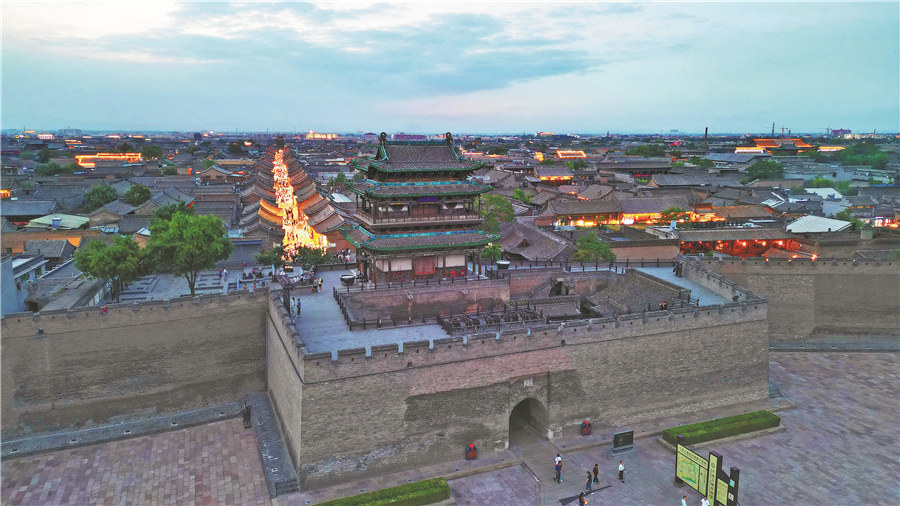
Ancient City of Pingyao
Introduction
The Ancient City of Pingyao, situated in Shanxi province, China, stands as a remarkable example of a traditional Han Chinese city from the Ming (1368-1644) and Qing (1644-1911) dynasties. Founded in the 14th century, Pingyao is renowned for its well-preserved urban landscape, making it one of the most complete ancient cities in China. The site encompasses the entire walled area of Pingyao, along with Shuanglin Temple (located six kilometers southwest of the county seat) and Zhenguo Temple (situated 12 kilometers northeast of the county seat). Recognized for its historical significance, the Ancient City of Pingyao, along with the Shuanglin Temple and Zhenguo Temple, was designated as a UNESCO World Cultural Heritage Site in 1997, providing profound insights into Chinese cultural, social, economic, and religious development over the centuries.
Historical Background
Pingyao’s history traces back to the reign of King Xuan of the Western Zhou Dynasty (c.11th century-771 BC), initially built as a defense against northern nomadic tribes. Evolving into a pivotal commercial hub in Shanxi province, Pingyao is notably hailed as the birthplace of China’s early banking system. During the Ming and Qing periods, the city flourished as a prosperous financial center, fueled by Shanxi merchants who played a key role in its development. Despite challenges like water scarcity and changing transportation modes impacting its trade, Pingyao remains well-preserved, retaining its historical charm.
Architectural Marvels
City Walls
Constructed during the Ming Dynasty, the wall of Pingyao boasts six gates, four turrets, 72 watchtowers, and 3,000 crenels. This well-preserved ancient city wall is a central feature of Pingyao, standing at 10 meters tall, encompassing 6,163 meters, and measuring three to five meters wide at the top. The wall, with two gates on its west and east sides and one gate each on the southern and northern walls, features barbican entrances with inner and outer doors and towers above. Seventy-two watchtowers are evenly spaced along the top, with 3,000 crenels for archery purposes, symbolizing Confucius' disciples and students.
Traditional Dwellings
The Ancient City of Pingyao follows traditional Han planning and building styles, with four main streets, eight smaller ones, and 72 lanes forming a well-organized grid. Private houses, constructed as courtyard or manmade-cave houses, exhibit local characteristics. Presently, Pingyao boasts 3,797 courtyard houses, with 400 exceptionally well-preserved examples. The town also features ornate temples, shops, and historical buildings like the Temple of Confucius and the Qingxu Temple, preserving the essence of Pingyao as a prosperous commercial hub during the Ming and Qing periods.
The Zhenguo Temple, located in the northeast part of the city, dates back 1,000 years, with its Hall of Ten Thousand Buddha (Wan Fo Hall) being one of the oldest wooden buildings in China. Notably, the painted statues from the Five Dynasties period (907-960) inside the Wanfo Hall are esteemed as precious sculptures.
The Shuanglin Temple, housing 10 halls, is located approximately 6 kilometers southwest of Ancient City of Pingyao. Originally rebuilt in 571 during the Northern Qi Dynasty (550-577), the temple is renowned as the Treasure House of Painted Sculptures, showcasing over 2,000 painted clay statues spanning the Yuan Dynasty (1271-1368) to the Ming Dynasty.
Other treasures in Pingyao include the Hall of Great Achievements (Da Cheng Dian) in the Temple of Confucius, reconstructed in 1163, and the Qingxu Temple, initially built in 657.
Legends and Stories
The parapet, known as the Maiden’s Wall, commemorates a young girl who sacrificed her life to save a worker. Legend has it that she used to watch her grandfather work on the city wall daily. One day, seeing a tired worker near the edge, she pushed him to safety but fell herself. In her honor, a smaller parapet was built on the wall.
Cultural Legacy
The Ancient City of Pingyao serves as a living museum of Chinese history, offering a glimpse into Han civilization with its preserved buildings and city layout. It provides valuable insights into traditional Chinese thinking, ethical values, and architectural forms. Cultural treasures like the Hall of Great Achievements in the Temple of Confucius and the Qingxu Temple narrate stories of the past. The Shuanglin Temple, renowned as the Treasure House of Painted Sculptures, and the Zhenguo Temple with its ancient wooden architecture, further highlight Pingyao’s rich cultural heritage.
Preservation and Conservation
Since its designation as a Chinese historical and cultural city in 1986, Pingyao has undergone continuous preservation efforts. The local administration has invested substantially in restoring and conserving the city’s historical sites. A comprehensive preservation plan categorizes buildings for various uses, such as museums, hotels, and cultural centers. Recent infrastructure projects aim to modernize amenities while preserving the town’s historical integrity, including upgrading utilities and maintaining the ancient city wall for future generations.
Tourism
Pingyao stands out as a premier tourist destination, drawing millions of visitors annually with its blend of history, culture, and architecture. The city hosts international events like the Pingyao International Photography Exhibition and the Pingyao International Film Festival, enhancing its global cultural significance. Tourists flock to experience the authentic atmosphere of the ancient town, exploring its winding lanes, historic temples, and residences. Measures implemented by the local government aim to enhance the visitor experience while safeguarding the city’s traditional character, offering a unique glimpse into ancient Chinese life and culture.








